Research
Flexible function is a core feature of brain circuits, particularly in the cerebral cortex where neurons participate in both local and long-range circuits to integrate sensory information and promote behavior. Cortical circuits rapidly alter their function in response to changes in behavioral state, such as attention and arousal, and in behavioral context, such as cognitive tasks. Over longer timescales, the properties of local and large-scale circuits are also modified by development and learning. Neurodevelopmental and neurodegenerative diseases impair these adaptive processes, making it critical to understand the mechanisms underlying healthy brain function.

State-Dependent Circuit Function
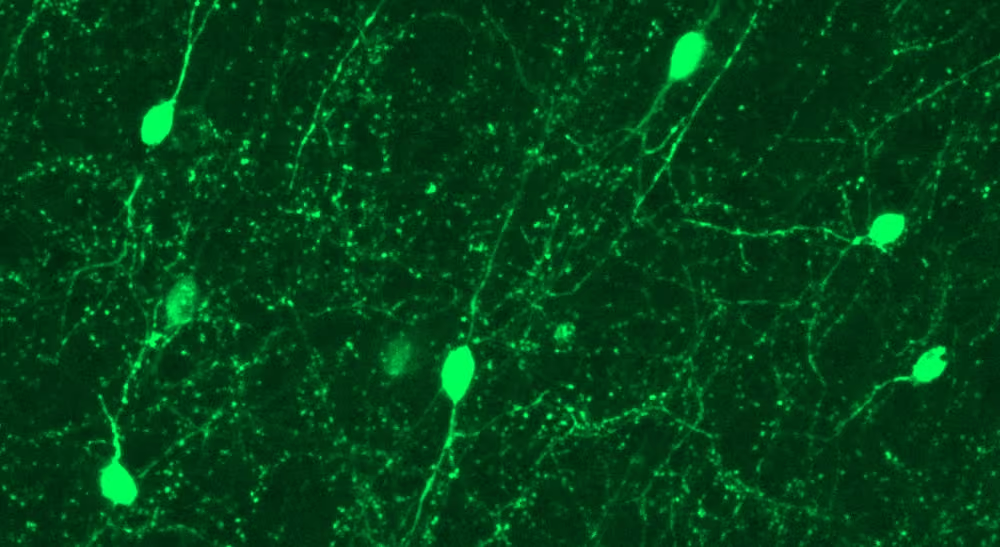
Brain activity is regulated by changes in behavioral state, including arousal, attention, fear, sleep, and task engagement. We use both spontaneous behavior, such as whisking and running, and goal-directed behavior, such as visually guided task performance, to examine how neural activity and circuit interactions change across states and behavioral contexts.

Neuromodulatory Regulation
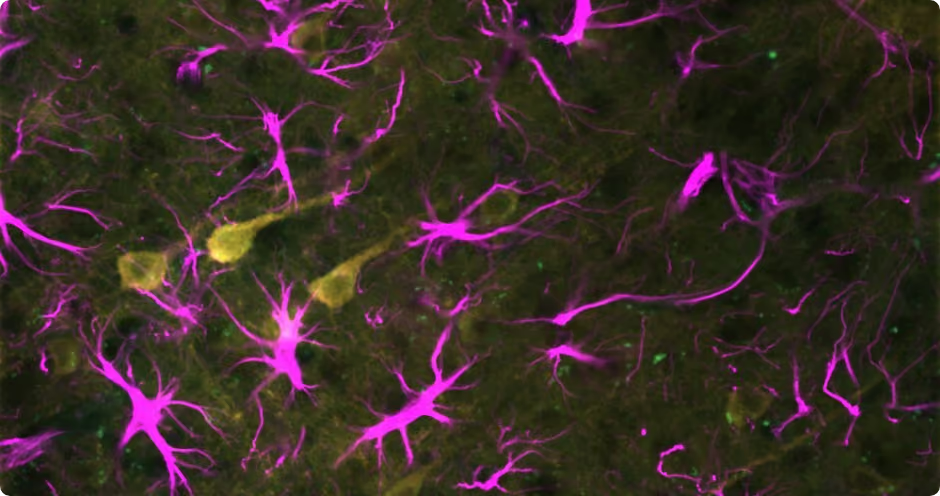
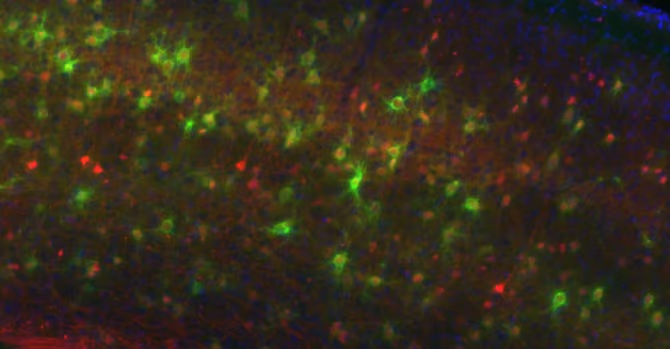
The function of neural circuits is continuously sculpted by the presence of neuromodulatory signals. Using multicolor imaging, we can track the release of neuromodulators such as acetylcholine and norepinephrine and simultaneously measure cortical network activity.
Cortical Dysregulation in Disease
Disease processes can alter or destabilize circuit activity, leading to loss of functional flexibility. We use genetic models of developmental and neurodegenerative disorders to examine how such alterations affect the architecture and function of local and large-scale cortical circuits.
Publications
Our team uses electrophysiology, imaging, computational modeling, and behavioral tools to better understand the links between individual cells, brain circuits, and behavior. We collaborate with research groups at Yale and elsewhere to examine brain function in health and disease.
Learn More